

What Is a Seed Wart And How to Get Rid of It?
If you have ever examined the bottom of your foot and noticed a painful, hard growth with tiny, dark dots embedded inside it, you might be worried that you are dealing with “wart seeds.” It is a very common concern that brings many people into our clinics. At Bay Area Foot and Ankle Associates, our dedicated podiatrists, Dr. John W. Scivally, DPM, and Dr. Robin K. Lie, DPM, frequently meet patients who are alarmed by these dark spots. We are here to clear up the medical myths surrounding plantar warts, explain what these mysterious spots actually represent, and provide you with a clear path to lasting relief. For more information, contact us or book an appointment online. We are conveniently located at 2227 Olympic Blvd, Walnut Creek, CA 94595.
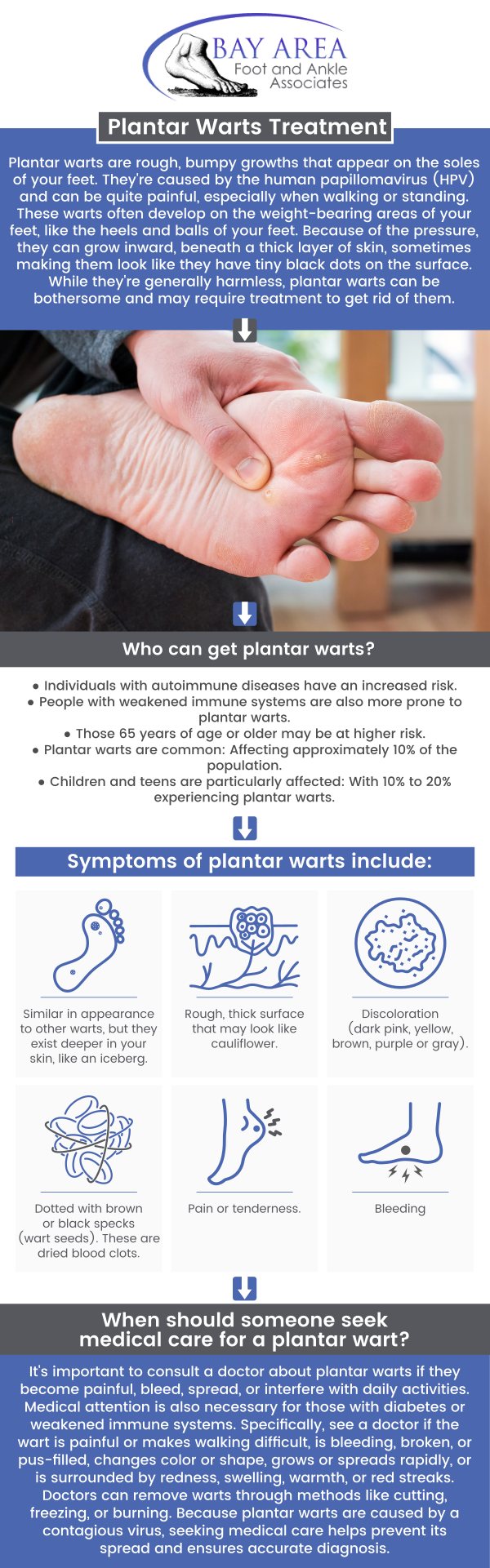
Table of Contents:
What Exactly Are “Wart Seeds”?
The Root Cause: Understanding HPV and Plantar Warts
How Our Doctors Distinguish Warts from Corns and Calluses
Will My Foot Wart Go Away on Its Own?
Why Over-The-Counter Treatments Frequently Fail
Advanced Treatment with Dr. Scivally and Dr. Lie
Frequently Asked Questions About Plantar Warts & “Wart Seeds”
Schedule Your Appointment Today
When patients visit our clinics concerned about wart seeds, Dr. Scivally and Dr. Lie always take the time to explain the true anatomy of a foot wart. It is an incredibly persistent misconception that the small black dots inside your wart are actual seeds that can fall out, take root elsewhere on your skin, and cause new warts to grow. In reality, these dark spots are not seeds of any kind.
As a wart develops and grows thicker, it requires a robust blood supply to survive. Tiny blood vessels, known as capillaries, grow up into the core of the wart tissue to supply it with necessary nutrients. Because you walk, run, and stand on your feet all day, the immense pressure causes these microscopic blood vessels to become traumatized, trapped, and clotted. The tiny black dots you are seeing are simply small, dried blood clots trapped inside the thickened skin of the wart. Understanding this scientific fact is often a huge relief for our patients, as Dr. Lie and Dr. Scivally can definitively assure them that there are no “seeds” waiting to spread across their feet.
If warts do not spread via seeds, how do they develop in the first place? Dr. Scivally and Dr. Lie explain to our patients that all warts, including the plantar warts found on the soles of the feet, are caused by a viral infection known as the human papillomavirus, or HPV. This particular virus thrives in warm, moist environments, making places like public swimming pools, communal locker rooms, and shared gym showers prime locations for exposure.
The virus cannot simply penetrate perfectly healthy, intact skin. Instead, it enters the body through microscopic cuts, tiny scratches, or vulnerable, water-logged skin on the bottom of your feet. Once the virus takes hold in the outer layer of the skin (the epidermis), it causes the skin cells to multiply rapidly, creating the hard, rough bump that you eventually recognize as a wart. Dr. Scivally and Dr. Lie emphasize that while the virus is contagious through direct contact, practicing good foot hygiene and wearing protective shower shoes in public areas can drastically reduce your risk of infection.
Because plantar warts are often covered by a thick layer of callus tissue, they can be incredibly difficult for the average person to identify correctly. Dr. Lie and Dr. Scivally often treat patients who have spent weeks trying to file down what they thought was a harmless callus, only to realize it was a painful viral wart.
During your evaluation at Bay Area Foot and Ankle Associates, our doctors use their extensive dermatological expertise to make an accurate diagnosis. For instance, Dr. Scivally and Dr. Lie know that a plantar wart will typically interrupt the natural skin striations (your foot’s natural fingerprints), whereas a standard callus will have skin lines that continue directly across its surface. Additionally, plantar warts tend to be remarkably painful when squeezed from the sides, while corns are typically more painful when pushed directly inward.
One of the most common questions Dr. Lie and Dr. Scivally hear is whether a wart will eventually disappear without intervention. In some cases, particularly in children and teenagers who have highly active immune responses, the body will naturally recognize the virus and fight off the wart over a period of months or even years.
However, Dr. Scivally and Dr. Lie caution that waiting for a wart to clear up naturally is often not the best strategy for adults. In adults, the immune system often ignores the localized HPV infection, allowing plantar warts to become incredibly stubborn, deeply embedded, and highly persistent. Furthermore, because these warts are located on weight-bearing areas of the foot, they can cause severe shooting pain with every step. Dr. Lie points out that avoiding the pain of a plantar wart can even cause you to subconsciously alter the way you walk. Over time, this change in gait frequently leads to secondary biomechanical issues, including debilitating ankle, knee, and lower back pain.
Before coming to Bay Area Foot and Ankle Associates, many of our patients attempt to treat their warts using drugstore freezing kits or over-the-counter salicylic acid patches. Dr. Scivally and Dr. Lie understand the appeal of home remedies, but they frequently see the limitations of these products. Because the skin on the bottom of the foot is the thickest on the entire body, over-the-counter treatments simply are not strong enough to penetrate deeply enough to destroy the root of the viral tissue. Attempting “do-it-yourself” bathroom surgery by picking, clipping, or cutting the wart can also lead to severe bacterial infections or inadvertently spread the virus to other, previously healthy parts of your foot.
When home treatments fail to clear stubborn plantar warts and their unsightly “seeds,” professional medical intervention is the safest and most effective route. At Bay Area Foot and Ankle Associates, Dr. John W. Scivally and Dr. Robin K. Lie provide expert, evidence-based dermatological care designed to eliminate the underlying viral infection completely and minimize the chance of recurrence.
Your doctors will work directly with you to design a personalized treatment plan tailored to your lifestyle and the severity of your condition. Dr. Lie and Dr. Scivally offer a variety of advanced, clinical-grade options. This may include prescription-strength topical medications that safely and gradually peel away the infected tissue, clinical cryotherapy to freeze the lesion at much lower temperatures than home kits can achieve, or innovative immunotherapy to stimulate your body’s natural defenses. For highly persistent or deeply embedded growths, Dr. Scivally and Dr. Lie can perform a minor surgical excision right in the office under local anesthesia, ensuring your complete comfort throughout the short procedure.
Can I pick or pull a “wart seed” out with tweezers?
No. Because “wart seeds” are actually clotted blood vessels, picking or digging at them will cause painful bleeding and create an open wound. Dr. Scivally and Dr. Lie strongly advise against home surgery, as it frequently leads to severe bacterial infections and can spread the wart virus to other areas of your foot.
Do the black dots mean the wart is dying?
Not necessarily. A common myth is that the appearance of black dots means the wart is at the end of its lifecycle. In reality, it simply indicates that the capillaries feeding the wart tissue have become traumatized and clotted due to the daily pressure of walking and standing.
Are wart seeds contagious?
The black dots themselves are just trapped blood and are not contagious. However, the underlying Human Papillomavirus (HPV) that caused the wart is highly contagious. It can spread through direct skin-to-skin contact or by touching contaminated surfaces, such as communal shower floors.
How can I prevent foot warts from spreading?
To stop the virus from spreading, always wear sandals or water shoes in public pools, locker rooms, and shared showers. Keep your feet clean and dry, change your socks daily, and never share shoes, pumice stones, or towels with someone who currently has a foot wart.
Why didn’t my over-the-counter freeze kit work?
The skin on the sole of your foot is much thicker than the rest of your body. Over-the-counter freezing kits simply cannot reach the cold temperatures necessary to penetrate this thick skin and destroy the root of the virus. Dr. Lie and Dr. Scivally utilize clinical-grade treatments that are significantly stronger and much more effective.
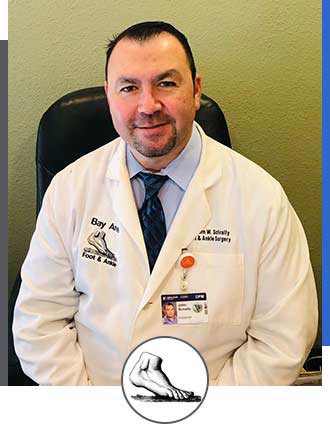


Don’t let foot warts limit your mobility, restrict your active lifestyle, or cause you unnecessary daily discomfort. Contact Bay Area Foot and Ankle Associates today to schedule a comprehensive evaluation with Dr. Scivally or Dr. Lie. With convenient locations in Walnut Creek and Brentwood, our dedicated doctors and welcoming staff are ready to help you take the first step toward completely pain-free, healthy feet.
Check Out Our 5 Star Reviews


Additional Services You May Need
▸Custom Foot Orthotics
▸Ingrown Toenail Specialist
▸Traditional Podiatry Care
▸Foot and Ankle Surgery Clinic
▸Bunion Doctor
▸Corns and Calluses
▸Foot Arthritis and Joint
▸Warts
▸Video Gait Analysis
▸Athletic Taping
▸Pediatric Foot Specialist
▸Gait Abnormalities
▸Foot Dermatologist
▸Foot Deformities
▸Chronic Foot Injury
▸Diabetic Foot Specialist
▸Acute Foot Injuries
▸Podiatric Sports Services
▸Plantar Fasciitis Specialists



 Send Text
 How May I Help You?