

Painless Foot Corn Removal and Podiatry Care in Pleasant Hills, CA
Dr. John W. Scivally, DPM, and Dr. Robin K. Lie, DPM, offer comfortable foot corn removal and podiatry care for individuals near Pleasant Hill, CA. Each treatment plan is designed to ease discomfort, address repeated irritation, and support healthier feet. For more information, contact us or schedule an appointment online. We are conveniently located at 2227 Olympic Blvd, Walnut Creek, CA 94595.
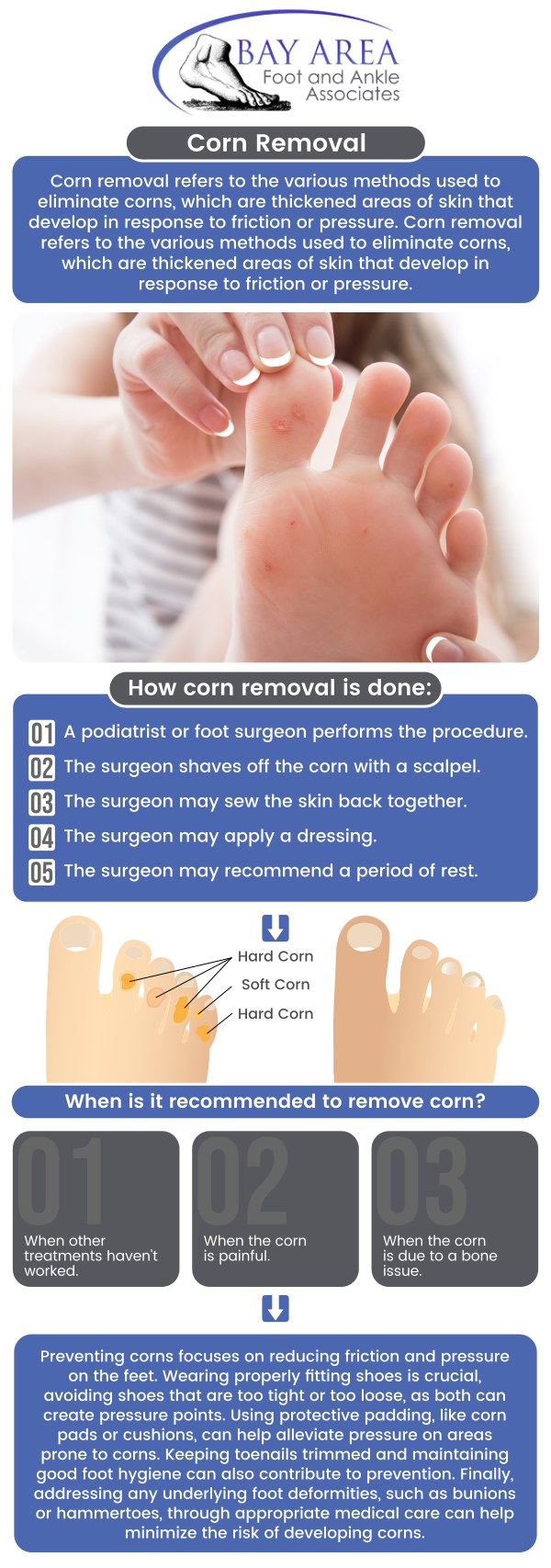
Table of Contents:
Is the professional, in-office debridement (removal) of a foot corn completely pain-free?
What specific instruments or techniques do podiatrists use to ensure a gentle corn removal process?
Will I need local anesthesia to have a deep soft corn removed from between my toes?
How long does it take to walk comfortably again after undergoing a professional foot corn procedure?
Do traditional plaster-casted custom orthotics help prevent friction corns from forming on hammertoes?
How Do Dr. John W. Scivally and Dr. Robin K. Lie Provide Comfortable Corn Removal Near Pleasant Hill, CA?
At Bay Area Foot and Ankle Associates, our experienced podiatrists are skilled in the professional, in-office debridement of foot corns. This procedure involves using sterile instruments to gently and precisely remove the thickened, hardened skin that forms a corn. Many of our patients in the Bay Area ask if corn removal is painful. In most cases, the answer is no—debridement is typically well-tolerated with minimal to no discomfort, especially when performed by our knowledgeable foot and ankle specialists. The reason is that the callused tissue of a corn does not contain nerve endings, so its removal is usually not painful.
However, we understand that each patient is unique. If your corn is particularly deep, or if there is underlying soreness, inflammation, or even infection, you may experience some mild sensitivity during the procedure. Patients with certain medical conditions, such as diabetes or peripheral neuropathy, may also have different sensations or risks. In rare instances where the corn or surrounding skin is especially tender, our podiatrists may use a local anesthetic to numb the area, ensuring your comfort throughout the treatment.
Most patients at Bay Area Foot and Ankle Associates experience immediate relief from the pain and pressure caused by corns after debridement. To help prevent recurrence, we’ll provide you with personalized aftercare instructions and recommendations for ongoing foot health. If you are concerned about pain or have any specific symptoms or medical conditions, we encourage you to discuss them with our team. We are committed to tailoring every procedure to your individual comfort and safety.
At Bay Area Foot and Ankle Associates, our team of experienced podiatrists employs a range of specialized instruments and advanced techniques to ensure that corn removal is as gentle and comfortable as possible for our patients. Each corn removal procedure begins with a thorough assessment of the affected area, allowing our doctors to determine the depth, size, and nature of the corn for safe and effective treatment.
To minimize discomfort, our podiatrists use sterile, fine-edged scalpels or precision dermatological blades, ensuring careful removal of only the thickened skin while protecting the healthy tissue beneath. In many cases, we may first soften the corn by soaking the foot or applying a keratolytic agent such as a urea- or salicylic acid-based medicated cream. This step helps to break down hardened skin, making the removal process easier and less uncomfortable.
Our doctors may also utilize specialized tools, such as a pumice stone or rotary burr, to gently file down any remaining thickened tissue, resulting in a smooth and pain-free finish. Throughout the procedure, your comfort is our top priority. We work slowly and communicate continuously with you to ensure you remain at ease, and for especially deep or sensitive corns, local anesthesia can be provided.
After removal, we apply an antiseptic and may recommend custom padding or orthotic devices to relieve pressure on the treated area, helping to prevent recurrence and promote proper healing. By combining precise instruments, expert techniques, and a patient-centered approach, Bay Area Foot and Ankle Associates delivers effective and compassionate corn removal for every patient.
If you need to have a deep soft corn removed from between your toes, the experienced podiatrists at Bay Area Foot and Ankle Associates can help ensure your comfort throughout the procedure. Soft corns, which often develop in the moist spaces between the toes, may have a core that extends into the skin and can cause significant pain. At our practice, corn removal typically involves carefully trimming away the thickened skin and, if necessary, extracting the deeper core.
Because this area of the foot is especially sensitive, our providers often recommend local anesthesia to numb the site before beginning the procedure. This approach helps minimize discomfort and allows for a smoother, more comfortable experience during your treatment. The decision to use local anesthesia at Bay Area Foot and Ankle Associates depends on factors such as the size and depth of the corn, your pain tolerance, and your overall health.
During your visit, your podiatrist will thoroughly assess your situation and discuss the best treatment plan with you. For deep or particularly painful soft corns, local anesthesia is generally considered best practice for patient comfort and optimal outcomes. If you have concerns about corn removal or anesthesia, our team is always available to answer your questions and provide expert guidance tailored to your needs.
At Bay Area Foot and Ankle Associates, our experienced podiatrists prioritize both your comfort and a speedy recovery following professional corn removal. Most patients are able to walk comfortably again within just a few days, though the exact recovery time can depend on the size and depth of the corn, as well as the specific removal technique used.
If your corn was treated with a simple paring technique—where the thickened skin is carefully shaved down—you may experience only minor discomfort and can often walk normally right away, with mild tenderness lasting a day or two. However, if your procedure required removal of deeper tissue, treatment of an infection, or correction of an underlying structural issue, your recovery period may be slightly longer, sometimes extending up to a week.
It’s completely normal to feel some soreness or sensitivity in the treated area at first. Our Bay Area Foot and Ankle Associates team will provide you with detailed aftercare instructions, such as keeping the area clean, wearing cushioned or open footwear, and avoiding high-impact activities to encourage optimal healing. Most patients notice that discomfort lessens significantly within 48 to 72 hours, and are able to resume regular walking without significant pain.
At Bay Area Foot and Ankle Associates, we offer traditional plaster-casted custom orthotics as part of our comprehensive approach to treating a variety of foot conditions, including hammertoes. Hammertoes are characterized by an abnormal bend in one or more toe joints, often leading to the development of painful friction corns on the tops or tips of the affected toes due to persistent rubbing against footwear.
Our skilled podiatrists use plaster casting techniques to design and fit custom orthotics tailored to address your unique foot biomechanics. These orthotics work by supporting your arches, redistributing pressure, and improving overall foot mechanics. For patients with hammertoes, this means that custom orthotics can help correct underlying gait abnormalities and reduce excessive pressure on specific areas of the foot. By promoting even weight distribution and realigning the foot, orthotics may decrease the amount of force transmitted to the toes, thereby lowering the risk of friction and shear forces that contribute to corn formation.
However, it’s important to understand that while our custom orthotics can relieve some of the pressure on hammertoes and help minimize the risk of friction corns, they do not directly correct the toe deformity or eliminate friction at the most prominent joints. Therefore, our team typically recommends a multifaceted approach for optimal results. This may include footwear with a roomy toe box, toe padding, or protective coverings—strategies designed to further reduce friction and protect the affected toes.
Our plaster-casted custom orthotics at Bay Area Foot and Ankle Associates can play a valuable role in reducing the formation of friction corns in patients with hammertoes by improving foot alignment and pressure distribution. For the best outcomes, we combine orthotic therapy with additional preventive measures, ensuring you receive comprehensive and personalized care for your foot health.
Dr. John W. Scivally, DPM, and Dr. Robin K. Lie, DPM, offer personalized care for patients from Pleasant Hill who are experiencing painful or persistent foot corns. They examine the hardened skin and determine whether ongoing pressure, friction, or ill-fitting shoes may be contributing to the corn, and uneven pressure on the feet. Treatment may include professional, sterile corn removal designed to improve comfort and mobility. When appropriate, the doctors may also recommend footwear modifications or custom-molded orthotics to redistribute pressure and reduce recurrence. At Bay Area Foot and Ankle Associates, each treatment plan is tailored to support healthier feet and long-term relief.
For professional foot corn removal near Pleasant Hill, CA, contact us or schedule a consultation with Dr. John W. Scivally, DPM, or Dr. Robin K. Lie, DPM. Our office is located at 2227 Olympic Blvd, Walnut Creek, CA 94595, where we welcome patients from Pleasant Hill, Concord, Clayton, Danville, Alamo, Diablo, and nearby communities seeking relief from painful or recurring foot corns.
Check Out Our 5 Star Reviews


Additional Services You May Need
▸Custom Foot Orthotics
▸Ingrown Toenail Specialist
▸Traditional Podiatry Care
▸Foot and Ankle Surgery Clinic
▸Bunion Doctor
▸Corns and Calluses
▸Foot Arthritis and Joint
▸Warts
▸Video Gait Analysis
▸Athletic Taping
▸Pediatric Foot Specialist
▸Gait Abnormalities
▸Foot Dermatologist
▸Foot Deformities
▸Chronic Foot Injury
▸Diabetic Foot Specialist
▸Acute Foot Injuries
▸Podiatric Sports Services
▸Plantar Fasciitis Specialists



 Send Text
 How May I Help You?