

Corn and Callus: What’s the Difference and When Do They Require Care?
Corns and calluses are common foot conditions caused by friction or pressure, but they differ in appearance and severity. Corns are smaller, thicker areas of skin typically found on the toes, while calluses form on weight-bearing areas like the heels. While these conditions often don’t pose serious risks, they can cause discomfort. If left untreated, they can lead to complications such as infections or pain. At Bay Area Foot Doctors, Dr. John W. Scivally, DPM, and Dr. Robin K. Lie, DPM provide personalized care to safely remove corns and calluses and address the underlying causes to ensure your feet stay healthy and comfortable. For more information, contact us or book an appointment online. We have convenient locations to serve you in Walnut Creek, CA and Brentwood, CA.
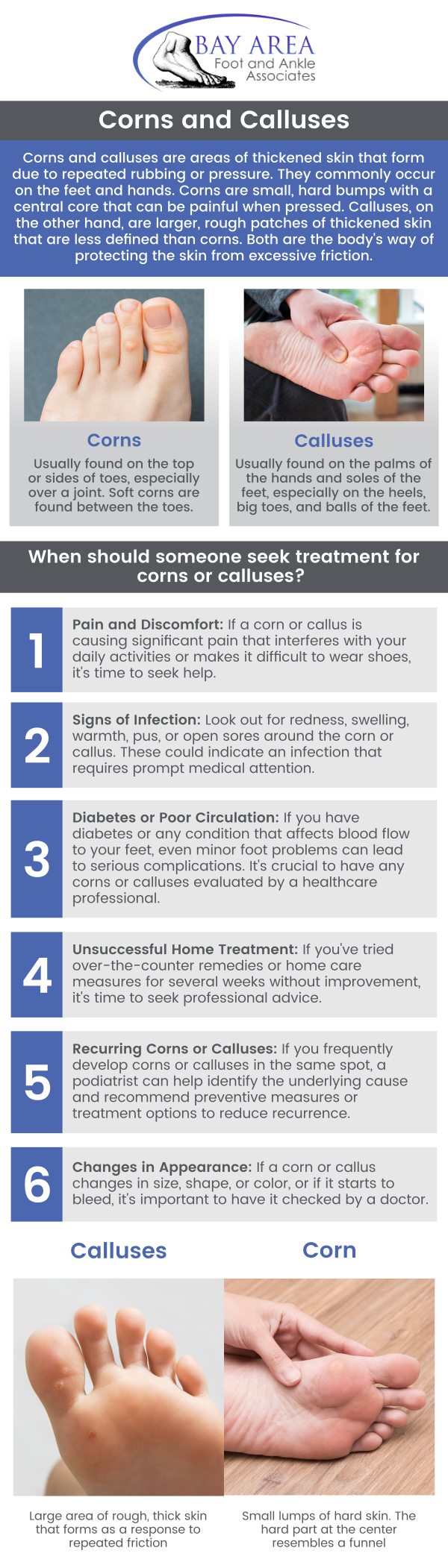
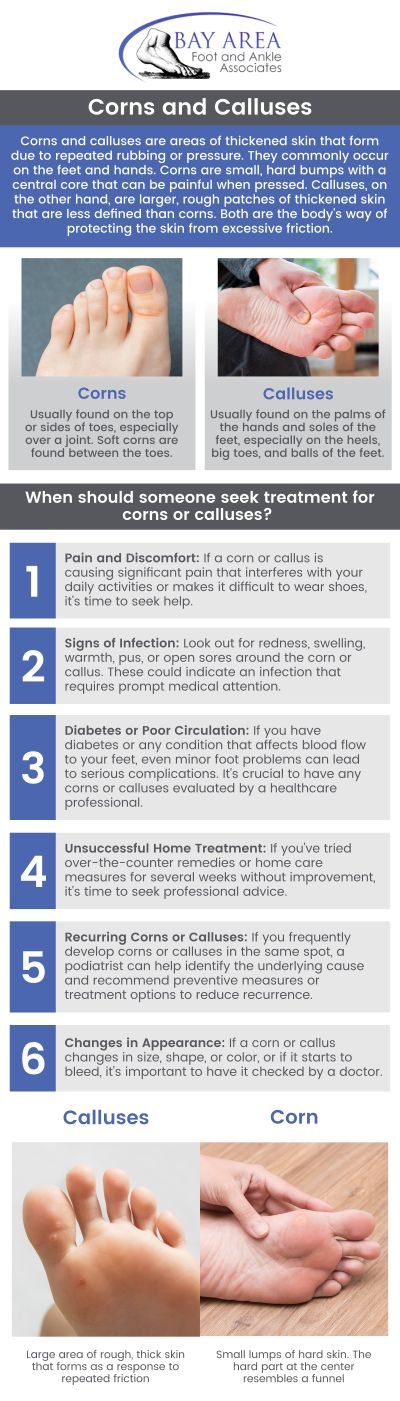
Table of Contents:
What are the main differences between corns and calluses on the feet?
What causes corns and calluses to develop over time?
When should I see a healthcare provider for a corn or callus?
How can I prevent corns and calluses from returning in the future?
Dr. John W. Scivally, DPM and Dr. Robin K. Lie, DPM: Expert Care for Corns and Calluses
At Bay Area Foot and Ankle Associates, we often see patients concerned about thickened areas of skin on their feet. Two of the most common conditions we treat are corns and calluses. While both develop as a result of repeated pressure or friction, they have important differences that affect how we treat them.
Corns are typically smaller than calluses, with a well-defined shape and a hard center surrounded by inflamed skin. They often appear on the tops and sides of the toes, or in places where the skin isn’t bearing weight. Corns can be quite painful, especially when pressed, and are frequently caused by friction from shoes or abnormal toe positioning.
Calluses, on the other hand, are usually larger and more irregular in shape. They tend to form on the soles of the feet—especially the heels and balls—where the most pressure is applied during standing or walking. Calluses have a more diffuse, thickened layer of skin and are usually not painful, though they may become uncomfortable if allowed to grow too thick.
The main causes for both corns and calluses include poorly fitting footwear, abnormal gait, or any activity that puts repeated pressure or friction on certain areas of the foot. At Bay Area Foot and Ankle Associates, our specialists can help you identify the underlying causes, provide expert treatment, and recommend strategies for prevention—such as selecting proper footwear and following a personalized foot care routine.
Corns and calluses are common conditions we treat at Bay Area Foot and Ankle Associates. These thickened, hardened areas of skin typically develop on the feet as a result of repeated friction, pressure, or irritation. When your feet experience ongoing stress—often from walking, running, or ill-fitting footwear—the skin naturally builds up extra protective layers to shield the deeper, more sensitive tissues beneath the surface.
One of the most frequent causes of corns and calluses is wearing shoes that are too tight, too loose, or have high heels, all of which can create abnormal pressure points. Patients who engage in activities that involve repetitive motion, or those who have foot deformities such as hammertoes or bunions, are at an increased risk. These conditions can change how weight is distributed across the feet, further contributing to the development of these bothersome skin lesions.
At Bay Area Foot and Ankle Associates, we also recognize that underlying medical conditions—especially diabetes—can increase your risk for corns and calluses. Diabetes can lead to changes in skin structure or decreased sensation in the feet, making it even more important to monitor and treat these areas promptly to prevent painful complications or infections.
If you are experiencing discomfort from corns or calluses, our team offers comprehensive evaluation and tailored treatment options to relieve your symptoms and address the root cause. Early intervention can prevent further complications and keep your feet healthy and pain-free.
If you are experiencing a corn or callus, it’s important to know when to seek professional care. At Bay Area Foot and Ankle Associates, we recommend making an appointment if you notice signs of infection such as increased redness, warmth, swelling, pain, or drainage of pus. You should also seek our expert advice if your corn or callus becomes very painful, does not improve with home care, or if you are unsure whether the growth is actually a corn, callus, wart, or cyst.
Individuals with diabetes, poor circulation, or conditions that affect foot sensation should be especially cautious, as even minor foot problems can quickly become serious. If your corn or callus is making it difficult to walk, perform daily activities, or if you have ongoing discomfort, our team can provide safe, effective treatment options and help you prevent future issues. Let our experienced specialists help you maintain healthy, pain-free feet.
At Bay Area Foot and Ankle Associates, we are dedicated to helping you prevent corns and calluses from returning by addressing the underlying causes of pressure and friction on your feet. Our podiatric experts recommend choosing well-fitting shoes that provide adequate room for your toes and avoiding high heels or pointed-toe footwear, as these can increase localized pressure and contribute to recurring corns and calluses. Supportive, cushioned socks and the use of protective pads or custom insoles can help reduce friction and more evenly distribute pressure across your feet.
Maintaining proper foot hygiene is essential. We advise keeping your feet clean and moisturized to minimize the risk of dry skin, which can lead to callus formation. Regular self-examination of your feet for any thickened skin is important, and gently using a pumice stone after bathing can help keep callused areas smooth. However, it’s important to avoid aggressive removal techniques, as this can cause injury or infection.
If you have foot deformities such as bunions or hammertoes, our specialists at Bay Area Foot and Ankle Associates can evaluate your condition and recommend appropriate orthotic devices or corrective measures tailored to your needs. For patients managing chronic conditions like diabetes, our team provides comprehensive foot care and education to help reduce your risk of complications.
By practicing good foot hygiene, selecting appropriate footwear, and consulting with our experienced podiatrists for personalized care, you can significantly lower the chances of corns and calluses returning.
At Bay Area Foot and Ankle Associates, we understand the discomfort and potential complications caused by corns and calluses. Dr. John W. Scivally and Dr. Robin K. Lie, both highly experienced podiatrists, specialize in providing personalized treatment for these common conditions to restore comfort and promote healthy skin.
• Personalized Treatment by Dr. Scivally and Dr. Lie
Dr. Scivally and Dr. Lie begin each appointment with a thorough evaluation to assess the root cause of your foot condition. They will provide customized treatment options to ensure the most effective relief, addressing both the symptoms and underlying causes. Whether it’s professionally removing the hardened skin, recommending custom orthotics to correct gait abnormalities, or guiding you on selecting the right footwear to reduce pressure points, their goal is to restore comfort and promote long-term foot health.
Schedule an appointment with Bay Area Foot and Ankle Associates to get expert guidance and keep your feet healthy and comfortable. For more information, contact us. We serve patients from Walnut Creek CA, Brentwood CA, Concord CA, Pleasant Hill CA, Pittsburg CA, Antioch CA, Alamo CA, Danville CA, Oakley CA, and surrounding areas.
Check Out Our 5 Star Reviews


Additional Services You May Need
▸Custom Foot Orthotics
▸Ingrown Toenail Specialist
▸Traditional Podiatry Care
▸Foot and Ankle Surgery Clinic
▸Bunion Doctor
▸Corns and Calluses
▸Foot Arthritis and Joint
▸Warts
▸Video Gait Analysis
▸Athletic Taping
▸Pediatric Foot Specialist
▸Gait Abnormalities
▸Foot Dermatologist
▸Foot Deformities
▸Chronic Foot Injury
▸Diabetic Foot Specialist
▸Acute Foot Injuries
▸Podiatric Sports Services
▸Plantar Fasciitis Specialists



 Send Text
 How May I Help You?